
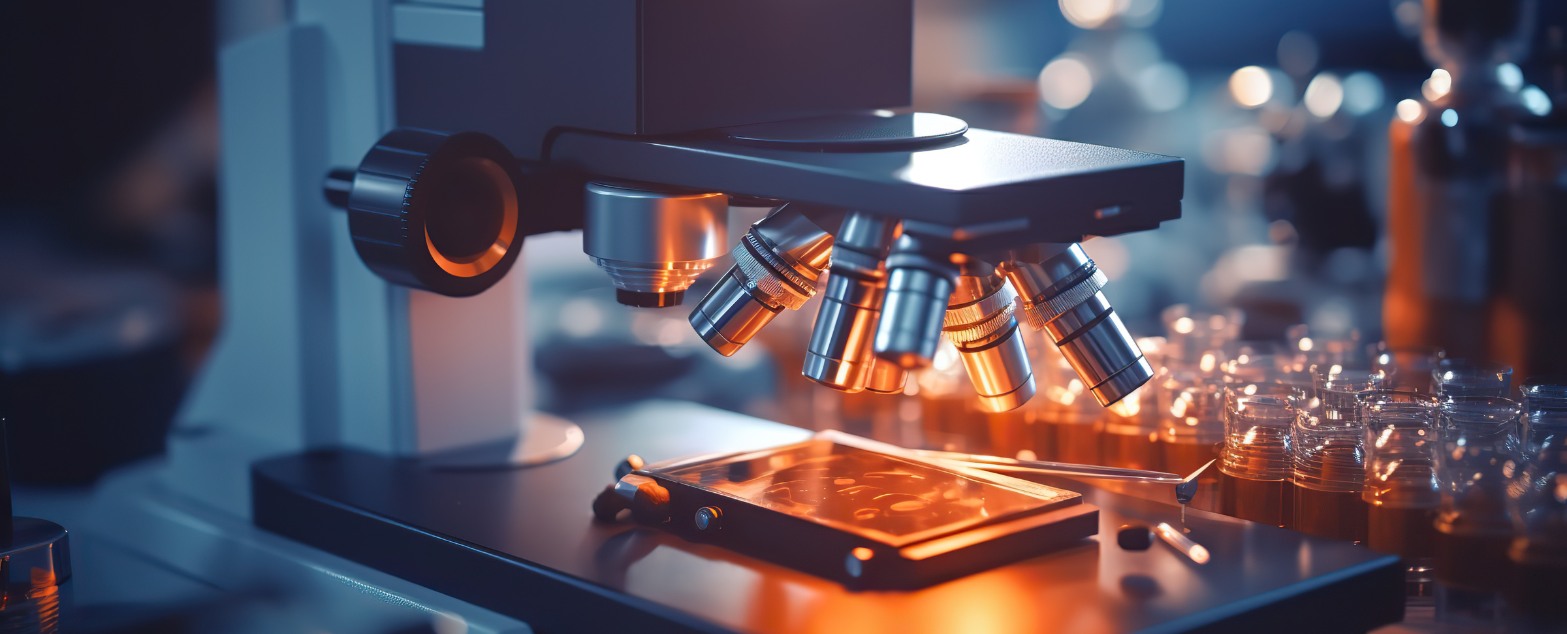
Scanning Electron Microscope (SEM) & Microscopy
Applications
● Scientific and industry-related fields, especially where characterizations of solid materials are beneficial.
● Topographical, morphological and compositional information.
● Detect and analyse surface fractures, provide information in microstructures, examine surface contaminations, reveal spatial variations in chemical compositions, provide qualitative chemical analyses and identify crystalline structures.
● Research tools in fields such as life science, biology, gemology, medical and forensic science, metallurgy etc.
What Will You Learn?
The participant after attending will be able to understand and analyse the various uses of the Scanning Electron Microscope (SEM) & Microscopy, which include:
● Magnification and higher resolution – as electrons rather than light waves are used, it can be used to analyse structures that cannot otherwise be seen. The resolution of electron microscopy images is in the range of up to 0.2 nm, which is 1000x more detailed than light microscopy.
● Diverse applications – Electron microscopy has a diverse range of applications in many different fields of research including technology, industry, biomedical science, and chemistry.
● Plays important role in semiconductor inspection, computer chip manufacture, quality control and assurance, analysis of atomic structures, and drug development.
● High-quality images – electron microscope uses the system to produce highly detailed images of structures that are of high quality, revealing complex and delicate structures that other techniques may struggle to reproduce.
The participant after attending will be able to understand and analyse the various uses of the Scanning Electron Microscope (SEM) & Microscopy, which include:
● Scientists use a microscope for studying microorganisms, cells, crystalline structures, and molecular structures.
● Microscopes help doctors diagnose the tissue sample.
Whom It Is Meant For?
Academicians, Scientific officers, Undergraduate, Master’s and Ph.D. students, and anyone who is keen to learn are all encouraged. It is useful in various industries:
● Forensic Science
● Biomedical Research
● Art
● Soil and Rock
● Nano Science
● Wire Industries
● Element Analysis
● Pathology Laboratory
● Hospitals / Medical Institutions
● Agriculture Industry
● Educational Institutes
● Pharmaceutical Laboratories
● Quality Control
● Life Science (Microbiology, Zoology, Biochemistry, Botany)
● Biotechnology
